
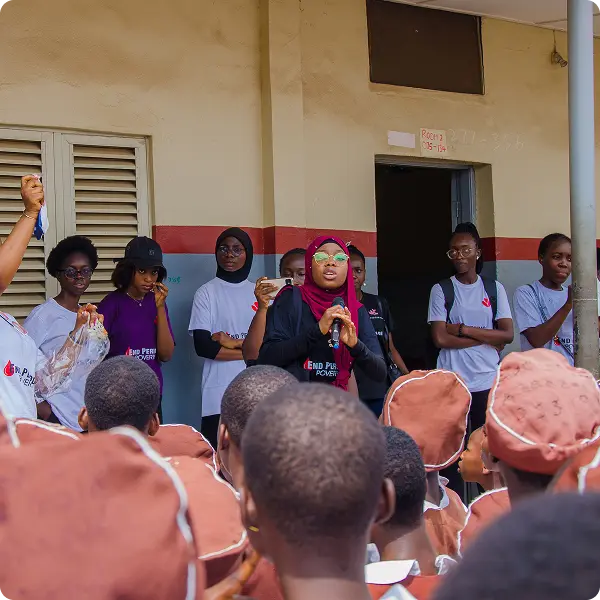
For millions of girls and women across Nigeria, menstruation is more than a monthly biological process. It can affect whether they attend school, go to work, participate in daily activities, or move through life with confidence and dignity. When menstrual products are unaffordable or unavailable, many people are forced to miss important opportunities, experience embarrassment and anxiety, or choose between buying pads and meeting other basic needs.
This is the reality of period poverty.
Period poverty is not limited to a lack of sanitary pads. It includes the absence of consistent access to affordable menstrual products, clean water, safe sanitation facilities, accurate information, and supportive environments where menstruation can be managed safely and without shame.
Although donations and menstrual product drives have helped thousands of people, they cannot provide the complete solution. We must move beyond temporary relief and work toward lasting access.
The Problem Is Bigger Than a Pad
When a girl misses school because she cannot afford menstrual products, the consequences extend far beyond that single day. Repeated absences can affect her academic performance, confidence, and long-term opportunities.
Similarly, when a woman uses unsafe alternatives because sanitary products are too expensive, the issue is not simply a shortage of pads. It reflects a broader failure of access, affordability, education, and infrastructure.
In Nigeria, the rising cost of living continues to place pressure on households. For low-income families, menstrual products represent a recurring expense that can be difficult to prioritize alongside food, transportation, school fees, healthcare, and other necessities.
As a result, girls and women are often forced to compromise their comfort, health, education, work, and dignity. No one should have to make these choices simply because they menstruate.
Donations Help, but Sustainability Matters
Donations have an important role to play in addressing period poverty. Providing someone with a pack of pads can solve an immediate problem, especially during an emergency. Menstrual product drives can also offer critical support to communities that have limited access to affordable products.
However, donations alone cannot guarantee long-term access.
What happens when the products run out? What happens next month, or the month after that? A lasting solution cannot depend entirely on whether another organization or individual remembers to organize a donation drive.
We need to rethink how menstrual products are produced, distributed, financed, and accessed. Emergency support is valuable, but it must be connected to sustainable systems that allow people to obtain menstrual products consistently and affordably.
Building a System That Lasts
A Pad for Her is built on a simple belief: no girl or woman should have to worry about whether she can afford to manage her period.
Addressing period poverty requires a comprehensive approach that combines affordable products, menstrual education, supportive schools, improved sanitation, community partnerships, and sustainable distribution models.
Making Menstrual Products Affordable and Accessible
Menstrual products should be affordable and consistently available, particularly in communities where access to supermarkets, pharmacies, and other retail outlets is limited.
Local production can help reduce costs, create employment, and make products more responsive to the needs of Nigerian communities. Community-based distribution can also make it easier for people in underserved areas to access menstrual products without traveling long distances or paying additional transportation costs.
Affordability is essential, but availability matters just as much. People should be able to find safe menstrual products when they need them, not only when a donation campaign is taking place.
Expanding Menstrual Education
Access to menstrual products is incomplete without accurate information.
Girls should understand how their bodies work, what to expect during their menstrual cycles, how to manage their periods safely, and when symptoms may require medical attention. They should also feel comfortable asking questions and seeking help without fear of ridicule or shame.
Menstruation should not be surrounded by misinformation, secrecy, or stigma. Open and age-appropriate conversations can help girls make informed decisions about their health and encourage communities to treat menstruation as a normal part of life.
Menstrual education should also include boys, men, parents, teachers, and community leaders. When more people understand menstruation, it becomes easier to create supportive environments for those who experience it.
Making Schools Part of the Solution
Schools are among the most important places to address period poverty. Girls should not have to stay home because their period begins unexpectedly or because they have run out of menstrual products.
Schools can support students by providing emergency menstrual products, improving water and sanitation facilities, and incorporating menstrual health education into existing learning programs. They can also create safe spaces where students can ask questions, receive support, and manage their periods privately.
When schools take menstrual health seriously, girls are more likely to attend classes, participate fully, and remain engaged in their education throughout their cycles.
Creating Access Beyond Donations
The future should not be built around a system in which people wait for someone to give them pads. Instead, we should develop sustainable models that combine affordable products, partnerships, community distribution, social enterprises, and targeted support for those who need additional assistance.
Businesses can help by producing and distributing affordable menstrual products. Governments can support the sector through effective policies, improved infrastructure, and investment in public health. Schools and community organizations can provide education and identify people who face the greatest barriers to access.
The goal is not simply to distribute more pads. The goal is to ensure that people can access safe menstrual products whenever they need them.
Dignity Should Not Be a Luxury
There is something fundamentally wrong with a society in which menstruation can determine whether a girl attends school, whether a woman goes to work, or whether someone can move through the day with confidence.
Periods are not a choice, and they are not an inconvenience that people should be forced to hide. Menstrual products should not be treated as luxury items when they are essential to health, participation, and dignity.
Every girl deserves to sit in a classroom without worrying about leaking or being mocked. Every woman deserves to go to work without wondering how she will afford her next pack of pads. Every person who menstruates deserves access to safe products, accurate information, proper sanitation, and respectful support.
Dignity should never depend on income.
This Is Bigger Than a Campaign
A Pad for Her is not simply about handing out pads or taking pictures. It is about asking a more difficult and important question: what would it take to make period poverty unnecessary?
The answer will require government agencies, schools, businesses, communities, manufacturers, nonprofit organizations, and individuals to work together. It will require stronger policies, better infrastructure, more affordable products, comprehensive education, and sustainable models that continue working long after a campaign ends.
Our success should not be measured only by how many pads we distribute in one month. It should also be measured by how many girls remain in school, how many women can continue working without interruption, how many communities gain reliable access to menstrual products, and how many people are able to manage their periods without shame or fear.
We do not just want to provide pads. We want to help build a future in which no girl has to choose between her period and her life.